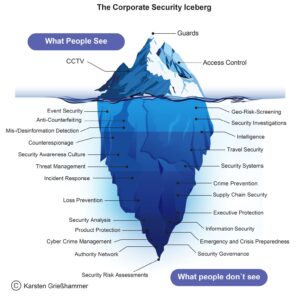
When executives think about corporate security risks, they often focus on the most visible threats: workplace violence, theft, unauthorized access, cyberattacks, or physical intrusion. While these threats deserve serious attention, some of the most significant security vulnerabilities facing organizations can be much less obvious.
Security gaps often develop between departments, processes, people, facilities, vendors, and technology. An organization may have security policies, access-control systems, surveillance cameras, security personnel, and emergency procedures, yet still maintain vulnerabilities that could expose employees, executives, facilities, clients, and business operations.
For executives, understanding every technical aspect of security isn’t necessarily the objective. The more important question is whether leadership understands where the organization’s greatest security exposures exist—and whether those risks have been properly evaluated.
At Premier Risk Solutions, we believe effective security begins with understanding an organization’s risk environment, identifying vulnerabilities, and developing practical strategies to reduce exposure before a security incident occurs.
Here are five security risks executives often overlook.
1. Security Gaps Created by Business Growth
Business growth is a positive development, but it can also create new corporate security risks.
Organizations frequently add employees, offices, facilities, vendors, technology, travel, events, and customers faster than their security programs evolve. A security strategy that worked effectively when a company had 50 employees and one location may no longer be appropriate after the organization expands to multiple offices, hundreds of employees, or a significantly larger operational footprint.
Growth can create questions that executives may not immediately consider:
Are access-control procedures and/or technologies still appropriate and relevant?
Are new facilities being evaluated for security vulnerabilities?
Have employee onboarding and termination procedures kept pace with growth?
Are security responsibilities clearly defined across locations?
Have new executives or employees created additional travel or protection requirements?
Are security standards consistent across facilities?
Has the organization’s emergency response plan been updated?
Security should evolve alongside the business. Organizations that wait until after an incident to reassess their security posture may discover that vulnerabilities have existed for months or even years.
A physical security assessment can help organizations identify these gaps and determine whether existing security measures remain appropriate as the business changes.
2. Overreliance on Security Policies and Procedures
Policies and procedures are important components of a corporate security program. However, having a policy does not necessarily mean an organization is prepared to execute it effectively.
Many organizations maintain emergency response plans, workplace violence policies, visitor-management procedures, evacuation plans, and incident-response protocols. The problem is that these plans may rarely—or never—be tested under realistic conditions.
Employees may not know their responsibilities. Managers may make conflicting decisions. Communication channels may become overwhelmed. Security personnel may discover that procedures written years ago no longer reflect current operations.
This creates an important distinction between security compliance and security effectiveness.
Executives should ask:
If this happened tomorrow, could our organization actually execute the plan?
Tabletop exercises, security drills, vulnerability assessments, and physical security red-team exercises can help identify gaps that aren’t apparent from simply reviewing documentation.
A security plan should not simply exist on paper. It should be tested, understood, and capable of working under pressure.
3. Third-Party and Vendor Security Risks
Organizations often invest significant resources protecting their own facilities and employees while overlooking security risks introduced by third parties.
Contractors, vendors, temporary workers, delivery personnel, property-management companies, event partners, and other external organizations may have legitimate access to facilities, sensitive areas, information, or employees.
The issue isn’t simply whether a vendor is trustworthy. The larger question is whether appropriate security controls are in place.
Executives should consider:
Who has access to company facilities?
Are contractor credentials removed when access is no longer required?
Are vendors subject to appropriate screening?
Are third parties aware of emergency procedures?
Are security expectations clearly defined in contracts?
Do vendors create additional risks during large-scale events?
Are former contractors promptly removed from access systems?
Third-party risk becomes particularly complicated when an organization assumes another party is responsible for security without clearly defining where responsibilities begin and end.
Organizations should understand the security implications of everyone who has access to their people, property, facilities, information, and operations.
4. Executive and High-Profile Personnel Exposure
Executives and other high-profile employees can face security risks that aren’t present for the average employee.
Travel, public appearances, conferences, corporate events, media exposure, social media activity, residences, and predictable routines can create opportunities for unwanted attention or targeted incidents.
However, executive security shouldn’t be viewed solely through the narrow lens of traditional executive protection.
A comprehensive approach considers the executive’s entire exposure environment.
For example, an executive traveling to an unfamiliar city may face substantially different risks than when attending a meeting at corporate headquarters. A public-facing executive speaking at a major conference may have different vulnerabilities than when working from a private office.
Organizations should consider:
Executive travel security
Event and venue security assessments
Advance planning
Transportation security
Residential security considerations
Public exposure and predictable routines
Threat monitoring and intelligence
Coordination with corporate security
Emergency response planning
The goal isn’t to unnecessarily restrict executives or disrupt their schedules. It is to understand their exposure and establish appropriate protective measures based on the actual risk environment.
5. Failure to Test the Physical Security Environment
One of the most overlooked security risks for businesses is assuming that physical security controls work simply because they are installed.
A camera system may provide extensive coverage but still contain blind spots. An access-control system may function properly from a technical standpoint while still allowing unauthorized individuals to exploit human behavior. A security officer may be positioned at an entrance but lack the information, training, or authority needed to respond effectively.
If someone wanted to gain unauthorized access to this facility, what would they try?
A properly designed physical security assessment evaluates the environment from the perspective of someone attempting to identify and exploit vulnerabilities.
Testing may identify issues involving:
Access control
Perimeter security
Employee security awareness
Visitor management
Security officer procedures
Surveillance coverage
Physical barriers
Emergency response
Sensitive areas
After-hours security
Communication procedures
The objective isn’t to criticize an organization’s security personnel or existing program. The objective is to identify opportunities for improvement before a real threat discovers them.
Turning Security Blind Spots Into Strategic Advantages
The most effective corporate security programs aren’t built around fear. They’re built around preparation, awareness, and risk management.
Executives don’t need to anticipate every possible threat. They need visibility into the risks that could materially affect their employees, facilities, reputation, customers, and business operations.
That requires leadership teams to periodically step back and ask difficult questions:
Where are our security vulnerabilities?
What assumptions are we making about our security program?
Have we actually tested those assumptions?
Has our security strategy kept pace with the organization?
Security assessments, vulnerability reviews, red-team exercises, executive security planning, and other proactive measures can help organizations identify weaknesses before they become costly incidents.
A Proactive Approach to Corporate Security
At Premier Risk Solutions, we help organizations take a proactive approach to security by evaluating vulnerabilities, identifying practical solutions, and helping leadership teams better understand their security risk environment.
Our approach is designed to help organizations move beyond simply having security policies and procedures toward developing a security program that is practical, measurable, and aligned with the organization’s overall risk profile.
Because the most dangerous security vulnerability isn’t always the one you can see.
Sometimes, it’s the one you haven’t thought to look for.
Is Your Organization Confident in Its Security Posture?
A proactive security risk assessment can help identify potential vulnerabilities before they become incidents.
If your organization is experiencing significant growth, opening a new facility, preparing for a major event, managing executive security concerns, or simply wants an independent evaluation of its existing security program, Premier Risk Solutions LLC can help.
Contact Premier Risk Solutions LLC to discuss how a proactive physical security assessment can help identify vulnerabilities and strengthen your organization’s security posture.
When organizations think about return on investment (ROI), the conversation often centers around revenue growth, operational efficiency, or technological innovation. Yet, one of the most overlooked sources of ROI comes from an area that directly affects every aspect of business continuity: Physical Security.
At Premier Risk Solutions LLC, we’ve seen firsthand how strategic physical security consulting helps organizations save money, protect people and assets, and maintain brand reputation—all while strengthening their overall risk posture. In today’s landscape of evolving threats, the question is no longer “Can we afford security consulting?” but rather, “Can we afford not to?”
Understanding the Value of Security Consulting
Physical security consulting is about more than installing cameras or hiring guards. It’s a holistic process that evaluates your environment, policies, procedures, staffing, and technology to create a customized plan that reduces vulnerabilities. The ROI comes not just in cost savings, but in risk avoidance and operational resilience.
Think of it this way: a single incident—whether a break-in , workplace violence event, or theft—can cost far more than the investment in professional security guidance. The role of a consultant is to anticipate these risks, design solutions to prevent them, and align security with organizational strategy.
Key Areas Where ROI Becomes Tangible
1. Cost Avoidance Through Risk Mitigation
Organizations often underestimate the financial impact of security incidents. Data from industry studies show that workplace violence incidents can cost companies millions in legal fees, lost productivity, and reputational damage. Theft or fraud can drain resources and erode trust.
By identifying weak points before they are exploited, security consulting helps avoid these high-cost disruptions. The ROI is clear: every prevented incident is money saved.
2. Operational Efficiency and Productivity
Poorly designed security measures can slow down operations. For example, inefficient access control systems frustrate employees and create bottlenecks. Consultants streamline these systems so security is effective without disrupting day-to-day business. The result? A safer workplace that actually enhances productivity.
3. Insurance and Compliance Savings
Many insurers reward companies that demonstrate strong security measures with lower premiums. Similarly, industries with regulatory requirements—such as finance, healthcare, or critical infrastructure—face steep fines for non-compliance. Security consulting ensures you meet or exceed standards, reducing financial liability while opening the door to cost savings.
4. Protecting Brand Reputation
In today’s digital-first world, news of a security breach spreads quickly. Beyond immediate financial losses, reputational damage can linger for years, impacting customer trust and investor confidence. Consulting services help businesses put proactive measures in place to ensure they are seen as reliable, safe, and trustworthy. That reputational stability is a long-term ROI few organizations can ignore.
5. Strategic Alignment With Business Goals
Security isn’t just a safety function—it’s a business enabler. When consultants design strategies that align with corporate objectives (such as supporting global expansion, safeguarding intellectual property, or protecting executives), the ROI extends beyond cost avoidance. Security becomes a foundation for growth.
Real-World Examples of ROI
Corporate Campus Security: A global tech company implemented consultant-recommended upgrades to access control and visitor management. The result was a 30% reduction in unauthorized access attempts, accompanied by measurable reductions in insurance premiums.
Executive Protection Programs: A consulting-led risk assessment for an executive travel program prevented multiple potential security incidents, saving the company both in liability exposure and reputational damage.
Retail Loss Prevention: Retailers who implemented consultant-guided physical and policy controls saw theft-related losses drop significantly, directly improving profit margins.
Why Now Is the Time to Invest
The threat landscape is evolving rapidly. From workplace violence and insider threats to supply chain disruptions and geopolitical risks, companies face more variables than ever before. At the same time, emerging technologies like AI-driven surveillance, smart access systems, and data integration are creating new opportunities for proactive protection.
Investing in physical security consulting now allows organizations to leverage these advancements strategically, ensuring they are not just reacting to threats but staying ahead of them.
The Bottom Line
The ROI of physical security consulting cannot always be measured in a single dollar figure, but its impact is undeniable. It prevents losses, strengthens compliance, improves efficiency, safeguards reputations, and supports long-term growth.
At Premier Risk Solutions LLC, our mission is to help clients recognize that security is not a cost center—it’s a value driver. By investing in professional consulting, organizations position themselves to thrive in an uncertain world. Reach out to us today to see how we may be of assistance!
In today’s hyperconnected and unpredictable global environment, corporate success is no longer driven by operations, marketing, and innovation alone. One element is often underestimated until it’s too late: security. Security is no longer just about locks, cameras, and badges (or guards, gates, and guns)—it’s a critical function that directly impacts your brand reputation, operational continuity, employee safety, and the organizational bottom line.
At Premier Risk Solutions LLC, we believe that security is not a support function—it’s a strategic one. Here’s why forward-thinking companies must embed security into the fabric of their corporate strategy.
1. The Threat Landscape Is Evolving
Gone are the days when security threats were limited to burglary or physical trespassing. Today’s organizations face multi-dimensional risks, including:
Crisis events such as pandemics, natural disasters, or geopolitical unrest
Each of these can cause significant financial, legal, and reputational damage. Security must now be anticipatory—not reactive—and that requires strategic placement at the leadership table.
A recent report by IBM showed that the average cost of a data breach in the U.S. exceeds $5 million. Yet many companies still treat security as an afterthought, addressing threats only after a breach or incident occurs.
2. Security Aligns with Enterprise Risk Management
Every company has risk on the radar—whether it’s financial, legal, operational, or reputational. Security intersects all these domains. If an executive is targeted abroad, or if a protest breaks out at a facility, how fast your team can respond depends on the level of preparedness embedded into your core operations.
When security is siloed from business strategy, risk management becomes fragmented. When it is integrated, your organization can build a resilient, agile framework capable of addressing both expected and unforeseen disruptions.
3. Protecting People = Protecting Performance
Your employees are your most valuable asset—and they’re also the most vulnerable during times of crisis. From workplace violence to executive protection during international travel, proactive security measures ensure that your team feels safe, supported, and focused.
Incorporating security into corporate strategy sends a message: “We take your safety seriously.” That enhances morale, retention, and your ability to attract high-caliber talent. It also reduces liability exposure in the event of an incident.
4. Investor Confidence and Board Expectations
Today’s investors and board members expect organizations to have robust, demonstrable plans in place for risk mitigation. Whether it’s cybersecurity, executive safety, or supply chain security, stakeholders want to know: What are you doing to prevent disruptions?
A company that integrates security into its strategic framework is better positioned to earn investor trust, secure funding, and weather periods of instability with minimal impact.
5. Reputation Management in the Age of Instant News
In the digital age, one poorly handled security incident can go viral and cause long-term brand damage. From data leaks to on-site incidents, how your company responds and communicates during a crisis can determine whether customers stay loyal or walk away.
When security is part of strategic planning, crisis communication protocols are already in place. Response teams are trained. Executives are briefed. And most importantly, the organization can respond swiftly, calmly, and with control—a key differentiator in moments of public scrutiny.
6. Security Adds Value—Not Just Cost
Too often, security is seen as a cost center. But when aligned with strategy, it becomes a value driver. Consider these examples:
A well-designed executive protection program allows leaders to focus on growth without distraction.
Threat assessments and travel security planning help your team expand into new markets safely.
Business continuity plans reduce downtime after natural disasters or supply chain disruptions.
Smart security investments pay dividends by preventing losses, safeguarding innovation, and maintaining customer trust.
Final Thoughts: Strategic Security Is Smart Business
Security is no longer just a department—it’s a business function that touches every level of an organization. From the C-suite to the front lines, your people, assets, and operations deserve strategic protection that scales with your goals.
At Premier Risk Solutions LLC, we partner with organizations to design and implement security solutions that are proactive, professional, and aligned with your business objectives. Whether you need executive protection, threat intelligence, or a full-scale risk assessment, we’re ready to help you turn security into a competitive advantage.
Is your security strategy where it needs to be? Let’s talk.
In an increasingly complex world where threats come in various forms, protective surveillance plays a crucial role in ensuring safety and security. This advanced security measure is designed to detect, deter, and respond to threats before they escalate. In this blog, we’ll explore the concept of protective surveillance, its applications, benefits, and how it integrates with broader security strategies.
What is Protective Surveillance? Protective surveillance involves covert monitoring of individuals, assets, or areas to identify potential risks and threats. Unlike traditional surveillance methods, it goes beyond mere observation; it actively assesses situations to neutralize dangers preemptively. This approach is widely utilized in the security industry, especially for high-profile individuals, corporate assets, and critical infrastructure.
At its core, protective surveillance is about blending into the environment while remaining vigilant. It requires skilled operatives who can work discreetly, analyze behavior patterns, and anticipate actions without compromising their position.
Applications of Protective Surveillance Protective surveillance has diverse applications in various sectors. Below are some common scenarios where this security measure proves invaluable:
Executive Protection: High-profile individuals, such as politicians, celebrities, and corporate leaders, are often targets for threats ranging from stalking to kidnapping. It ensures their safety by identifying suspicious activities and mitigating risks before they escalate.
Corporate Security: Businesses often face threats like industrial espionage and sabotage. This safeguards critical assets, intellectual property, and infrastructure by monitoring for signs of unauthorized access or malicious intent.
Event Security: Large-scale events, such as concerts and conferences, require comprehensive security measures. Surveillance plays a key role in ensuring the safety of attendees by monitoring crowds, identifying potential threats, and coordinating responses.
Public Safety: Governments and law enforcement agencies use protective surveillance to maintain public order and safety. This includes monitoring areas prone to crime or terrorism and deploying operatives to prevent incidents.
Residential Security: Protective surveillance is also employed in private settings, such as gated communities or estates. It provides peace of mind to residents by ensuring their surroundings are monitored for suspicious activities.
Key Components of Protective Surveillance To be effective, protective surveillance must encompass several key components:
Planning and Coordination: Detailed planning is essential to ensure that operatives know their roles and responsibilities. Coordination among team members is crucial for seamless execution.
Advanced Technology: Protective surveillance often involves the use of cutting-edge technology, such as CCTV cameras, drones, and sensors. These tools enhance the ability to monitor and respond to threats effectively.
Situational Awareness: Operatives must possess keen situational awareness to detect potential threats. This involves understanding the environment, identifying anomalies, and predicting behaviors.
Communication Systems: Reliable communication is vital for operatives to share information and coordinate actions. Secure channels are used to prevent interception.
Benefits of Protective Surveillance This method offers several advantages over traditional security measures. Let’s delve into some of its key benefits:
Proactive Security: Unlike reactive security approaches, this proactive stance identifies and addresses threats before they materialize. This proactive stance minimizes risks and enhances overall safety.
Discreet Operations: Protective surveillance operates covertly, which means individuals being monitored are often unaware of its presence. This ensures that security measures are not disruptive or intrusive.
Enhanced Decision-Making: By analyzing real-time data and behavior patterns, operatives can make informed decisions to prevent threats. This reduces the likelihood of incidents and improves response times.
Customized Solutions: Protective surveillance can be tailored to specific needs, whether it’s safeguarding a high-profile individual or securing a corporate facility.
Integration with Broader Strategies: Protective surveillance seamlessly integrates with other security measures, such as physical barriers, access control, and cybersecurity. This holistic approach provides comprehensive protection.
Challenges and Considerations While protective surveillance is highly effective, it is not without challenges. Here are some considerations:
Ethical Concerns: Covert monitoring raises ethical questions, particularly regarding privacy. Balancing security needs with ethical considerations is essential.
Cost Implications: Surveillance often requires significant investment in personnel, technology, and training. Organizations must assess the cost-benefit ratio.
Skill Requirements: Operatives must possess specialized skills to excel. Training and recruitment are critical to building a competent team.
Evolving Threats: As threats evolve, so must protective surveillance methods. Staying ahead of emerging risks requires continuous adaptation and innovation.
Legal Considerations: Ensure compliance with local laws and regulations while also respecting individuals’ Constitutional rights. Be keenly aware of privacy and trespassing laws when conducting surveillance on property requiring permission or consent. Consult with legal counsel as necessary.
Conclusion Protective surveillance is a cornerstone of modern security solutions. Its ability to proactively identify and neutralize threats makes it an indispensable tool in safeguarding individuals, assets, and environments. From executive protection to public safety, its applications are vast and impactful.
As technology continues to advance, protective surveillance will evolve, offering even greater capabilities and efficiencies. However, organizations must remain mindful of ethical considerations and adapt to the dynamic landscape of security challenges. By embracing this as part of a broader security strategy, they can create a safer and more secure world.
In essence, this is not just a security measure—it’s a commitment to foresight, vigilance, and excellence in safeguarding what matters most.
For high-profile individuals and families, residential security is paramount. Given their public visibility and wealth, they are often targets for various security threats, from burglary and surveillance to potential kidnapping and extortion. This blog post explores the best practices and technologies available to enhance residential security, ensuring that these individuals and their loved ones can enjoy peace of mind without compromising their safety.
1. Comprehensive Risk Assessment
Before implementing any security measures, it is critical to conduct a comprehensive risk assessment of the property. This assessment should be performed by a professional security consultant who will evaluate the property’s vulnerabilities, identify potential threats, and recommend tailored solutions. The assessment typically involves:
Perimeter Security Evaluation: Analyzing fences, gates, and entry points to determine their effectiveness.
Interior Security Analysis: Checking locks, windows, and alarm systems inside the residence.
Surveillance Systems Review: Evaluating existing surveillance cameras and monitoring systems.
Lifestyle Assessment: Understanding the daily routines and habits of the residents to identify potential risks, from the office to transportation to travel.
Reviewing Staff: Understanding how existing staff work within and support basic security functions and recommend whether or not the individual or family should have a designated residential security team in place.
Crime Mapping: Extracting current data from local law enforcement agencies to understand how crime demographics impact the threat to the greater residential area to better plan for safe travel and mitigate risks to the residence.
2. Perimeter Security
Securing the perimeter of the property is the first line of defense against intruders in residential security. Effective perimeter security measures include:
High-Security Fencing: Installing tall, robust fencing with anti-climbing measures such as spikes or barbed wire.
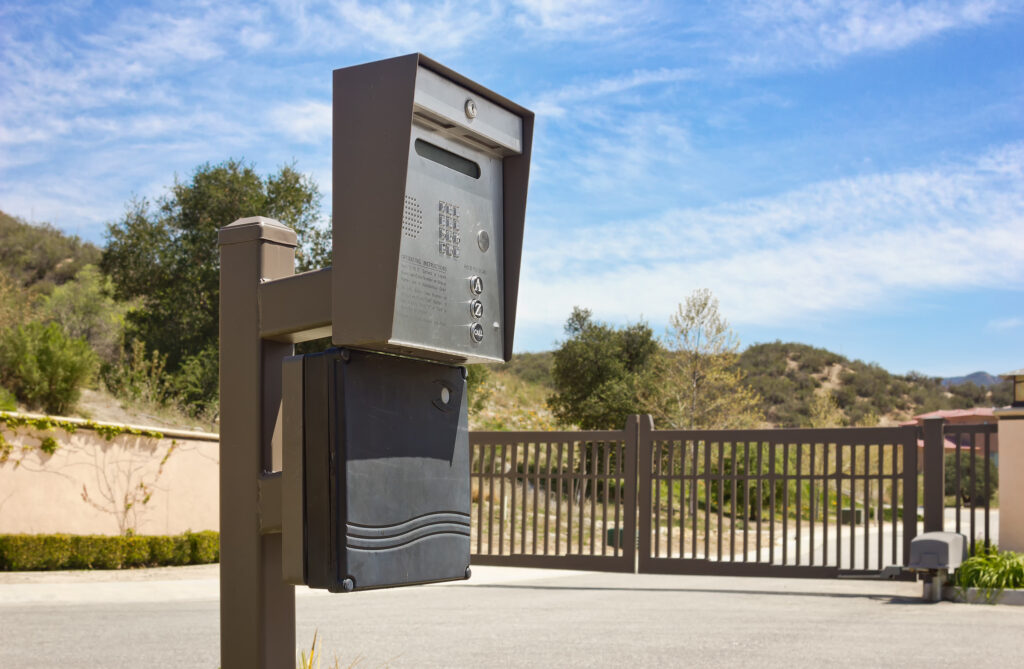
Access Control Gates: Using electronic gates with keypad entry, intercom systems, and remote control access to restrict unauthorized entry.
Motion-Activated Lighting: Installing lights that activate upon detecting movement to deter potential intruders.
Security Patrols: Employing professional security personnel to conduct regular patrols around the property, especially during high-risk periods and/or when the residence is vacant.
3. Surveillance and Monitoring
Modern surveillance technology is essential for maintaining residential security and deterring potential threats. Key components of an effective surveillance system include:
High-Resolution Cameras: Installing high-definition cameras with night vision capabilities around the perimeter and critical areas inside the residence.
Centralized Monitoring System: Integrating all cameras into a centralized system that allows for real-time monitoring and recording.
Remote Access: Ensuring that the surveillance system can be accessed remotely from smartphones or computers, allowing residents and security personnel to monitor the property at all times.
Video Analytics: Implementing advanced analytics to automatically detect unusual activity and alert security personnel.
4. Intrusion Detection Systems
Intrusion detection systems are designed to detect unauthorized entry and alert residents and security personnel. Essential elements in residential security include:
Window and Door Sensors: Installing sensors that trigger alarms when windows or doors are opened unexpectedly.
Motion Detectors: Placing motion detectors in strategic locations inside the residence to detect movement.
Glass Break Sensors: Using sensors that detect the sound of breaking glass to alert residents of attempted break-ins.
Panic Buttons: Installing panic buttons in multiple locations that residents can press to immediately alert security personnel of emergencies.
5. Safe Rooms
A safe room, also known as a panic room, is a secure location within the residence where residents can retreat during a security breach or emergency. Essential features of a safe room In residential security include:
Reinforced Doors and Walls: Using materials such as steel and concrete to make the room impenetrable.
Communication Systems: Equipping the room with phones, intercoms, or radios that connect directly to security personnel or emergency services.
Emergency Supplies: Stocking the room with essential items such as water, food, medical supplies, and defensive tools.
6. Access Control Systems
Access control systems help manage who enters and exits the property. Key components in residential security include:
Biometric Systems: Using fingerprint or facial recognition technology to grant access only to authorized individuals.
Key Card Systems: Issuing key cards that control access to different areas of the property.
Visitor Management: Implementing procedures to screen and log visitors before granting access, including background checks for service personnel.
7. Cybersecurity Measures
In today’s digital age, physical security is closely tied to cybersecurity. High-profile individuals must protect their digital assets and personal information by:
Securing Networks: Using firewalls, encryption, and secure Wi-Fi networks to protect against cyber threats.
Regular Updates: Ensuring that all software and systems are updated with the latest security patches.
Digital Hygiene: Practicing good digital hygiene by using strong, unique passwords and being cautious of phishing attempts.
Professional Monitoring: Engaging cybersecurity professionals to monitor and address potential digital threats.
8. Residential Staff Security Training
Ensuring that all residential staff members are trained in security protocols is crucial. Training should cover:
Emergency Response: Educating staff on how to respond to various emergencies, including intrusions, fires, and medical incidents.
Surveillance Monitoring: Teaching staff how to use and monitor surveillance systems effectively.
Access Control: Instructing staff on the proper use of access control systems and visitor management procedures.
9. Personal Safety Practices
High-profile individuals and their families should also adopt personal safety practices to minimize risks, including:
Awareness: Maintaining situational awareness and recognizing potential threats.
Travel Security: Using secure transportation services and varying travel routes to avoid predictability.
Confidentiality: Being mindful of sharing personal information and avoiding posting sensitive details on social media.
10. Regular Security Reviews
Security needs can change over time, so it’s important to conduct regular security reviews and updates in residential security. This includes:
Periodic Assessments: Scheduling regular assessments with security professionals to identify new vulnerabilities.
System Upgrades: Updating and upgrading security systems and technologies as needed.
Ongoing Training: Providing continuous training for staff and residents to stay informed about the latest security practices.
Personnel Background Screening: To mitigate potential insider threats, annual background checks on existing staff should be conducted to ensure no vulnerabilities and threats come from those already working within the residence. When there are changes to personnel, exit interviews, and checkout processes must be robust with all access privileges removed for departing staff. All new staff must undergo pre-employment background screening to ensure they are suitable for their role and responsibilities.
Conclusion
For high-profile individuals and families, residential security is a complex but essential aspect of their lives. By implementing comprehensive security measures, including perimeter protection, surveillance, intrusion detection, and personal safety practices, they can significantly reduce their risk exposure and enjoy greater peace of mind. Regular security reviews and updates ensure that their security measures remain effective in the face of evolving threats. Ultimately, a proactive and layered approach to security is the best way to protect their homes and loved ones.
If you have any specific questions or need further details, feel free to ask! Be strong, safe and secure!