
Security Begins Before the Assignment
When most people think about executive protection and event security, they picture security professionals accompanying an executive, monitoring an entrance, or managing access to a venue. While these responsibilities are important, they represent only a portion of an effective security operation.
The most successful security assignments often depend on work completed well before personnel arrive on-site or an event opens its doors.
This preparation, commonly known as security advance work, involves evaluating potential threats, assessing locations, reviewing logistics, coordinating with stakeholders, and developing plans to address foreseeable risks. It helps transform security from a reactive function into a proactive, risk-informed operation.
For organizations hosting high-profile executives, corporate meetings, conferences, and special events, advance planning can make the difference between a coordinated security program and one that struggles to respond when circumstances change.
At Premier Risk Solutions, effective security begins with understanding the assignment, identifying potential vulnerabilities, and preparing the people and processes needed to manage risk.
What Is Security Advance Work?
Security advance work is the process of evaluating an upcoming assignment or location before the primary security operation begins. It helps security teams understand the environment, identify potential vulnerabilities, and establish procedures that support safe and efficient operations.
The scope varies depending on the assignment. Protecting a corporate executive traveling between multiple locations requires a different approach from securing a large conference, private corporate gathering, or public-facing executive appearance.
However, the underlying objective remains consistent: identify foreseeable challenges before they become operational problems.
A comprehensive advance may include:
- Reviewing the client’s objectives, itinerary, and operational requirements.
- Conducting venue and site assessments.
- Evaluating access control, visitor management, and perimeter security.
- Assessing transportation arrangements and relevant logistical dependencies.
- Coordinating with client security teams, venue management, and other stakeholders.
- Reviewing emergency procedures and available response resources.
- Identifying contingencies for changing conditions, disruptions, or unexpected incidents.
The outcome should be a practical security plan that reflects the actual operating environment, not simply a generic checklist.

1. Executive Protection Begins With Preparation
Executive protection is frequently associated with close protection personnel accompanying a principal. However, the effectiveness of a protection detail depends on much more than the presence of a security professional.
Executives travel between offices, hotels, restaurants, conference centers, airports, and other locations where the security environment can change throughout the day. Each transition introduces different considerations involving access, transportation, privacy, timing, and coordination.
Advance planning helps security teams understand these environments before the executive arrives.
Understanding the operating environment
An effective advance considers the locations an executive is expected to visit, the operational requirements of each stop, and the procedures necessary to support secure and efficient movement.
This can include reviewing venue access arrangements, confirming designated contacts, identifying appropriate entry and exit options, and understanding the site’s emergency procedures.
For business travel, coordination with transportation providers, executive assistants, and corporate security personnel can also reduce uncertainty and help prevent avoidable disruptions.
Planning for contingencies
Schedules change. Meetings run late. Transportation arrangements become unavailable. Venues experience unexpected operational issues.
Security plans should account for reasonable contingencies rather than assume every part of an itinerary will proceed as expected.
Establishing communication protocols, identifying decision-makers, and preparing alternative arrangements helps teams respond more effectively when circumstances change.
The goal is not to eliminate every possible risk. It is to reduce uncertainty, improve coordination, and ensure the team is prepared to make informed decisions.
2. Event Security Is Determined Long Before the Doors Open
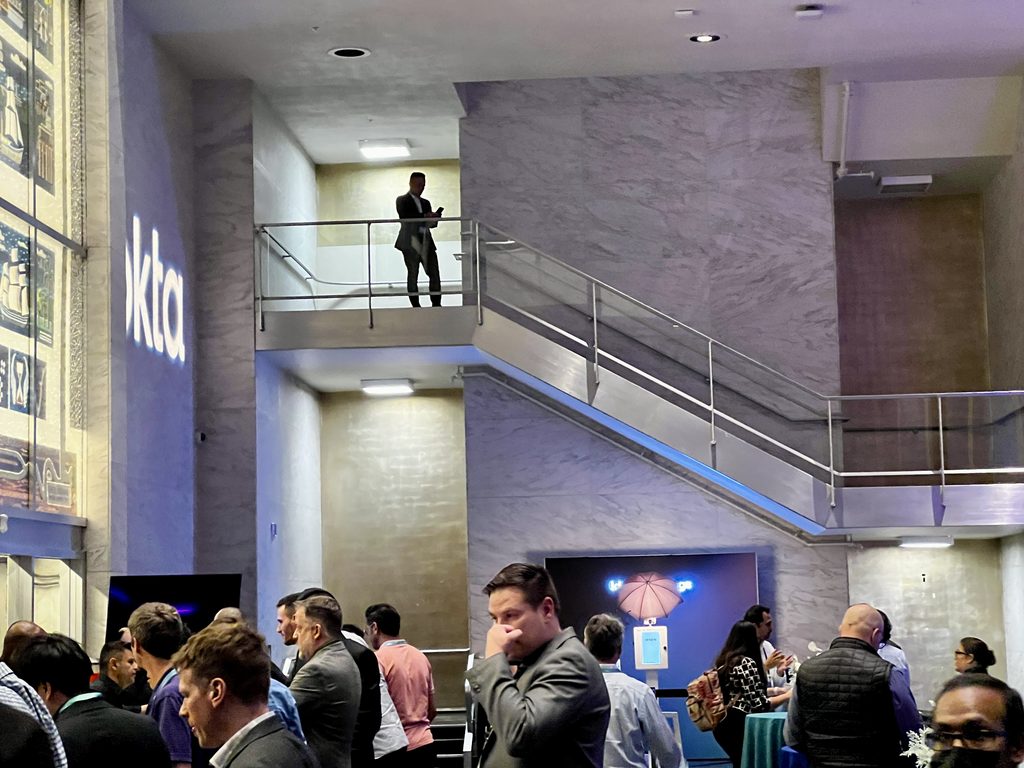
Corporate events create a different set of security challenges. Conferences, executive meetings, product launches, award ceremonies, and private gatherings may bring together employees, clients, senior leaders, vendors, contractors, and members of the public.
These activities can involve multiple access points, complex schedules, temporary infrastructure, and competing operational priorities.
Security planning must account for these factors without unnecessarily interfering with the attendee experience.
Assessing the venue
A venue walkthrough provides an opportunity to understand how the site functions and how security procedures should support its layout and intended use.
Depending on the event, an assessment may examine:
- Entrances, exits, and visitor screening arrangements.
- Credentialing procedures and restricted-access areas.
- Loading docks, service corridors, and vendor access.
- Emergency exits and evacuation procedures.
- Security staffing requirements and post responsibilities.
- Communications systems and escalation procedures.
- Coordination between venue personnel, event organizers, and security teams.
A venue that works well for an ordinary business meeting may require additional planning when hosting a high-profile executive or a large gathering with heightened security requirements.
The objective is to identify gaps early enough that they can be addressed during planning rather than during the event itself.
Integrating security with event operations
Security should not operate independently of the event team.
Event organizers need to understand how security procedures affect registration, guest movement, deliveries, schedules, and the overall attendee experience. Security personnel, in turn, need timely information about changes that could affect their responsibilities.
Establishing clear points of contact, reporting procedures, and escalation protocols before the event helps reduce confusion and supports consistent decision-making.
When security is incorporated into event planning from the beginning, it becomes easier to balance protection, professionalism, and operational efficiency.
3. Risk Assessments Turn Observations Into Action
A site visit alone does not constitute a complete security advance. Observations must be evaluated, prioritized, and translated into practical recommendations.
A structured risk assessment helps organizations distinguish between issues that require immediate attention and those that can be addressed through longer-term improvements.
A useful assessment considers three fundamental questions:
What could happen? Identify credible threats, operational vulnerabilities, and foreseeable disruptions relevant to the assignment.
What would the consequences be? Consider potential impacts on personnel safety, business continuity, assets, reputation, and the successful completion of the event or visit.
What should be done about it? Recommend proportionate controls, assign responsibilities, and establish procedures for addressing identified risks.
Not every vulnerability requires additional security personnel or expensive technology. Some issues can be mitigated through better access procedures, improved communication, revised scheduling, clearer responsibilities, or more effective coordination.
This distinction matters because the objective is not to maximize security spending. It is to allocate resources where they provide meaningful risk reduction.
For organizations evaluating their existing programs, independent physical security consulting can provide an additional perspective on whether current procedures adequately address operational needs.

4. Coordination Is as Important as Equipment and Personnel
Even a well-designed security plan can fail when responsibilities are unclear or critical information does not reach the people who need it.
Executive protection and event security frequently involve several parties, each responsible for different elements of the operation. These may include corporate security teams, executive assistants, facilities personnel, venue management, transportation providers, event organizers, and external security contractors.
Advance work establishes how these parties will communicate and coordinate.
Before an assignment begins, teams should understand:
- Who has authority to make operational decisions.
- Who receives and distributes time-sensitive information.
- How incidents and emerging concerns should be reported.
- Which party is responsible for each security function.
- How schedule changes and operational disruptions will be communicated.
- What procedures apply when an issue requires escalation.
These arrangements are especially important when multiple organizations share responsibility for a location or event.
Clear communication does not eliminate the possibility of an incident. It helps reduce avoidable confusion and improves the likelihood that personnel will respond consistently when something unexpected occurs.
5. Contingency Planning Helps Teams Adapt
No advance can predict every development. Weather, transportation disruptions, medical emergencies, schedule changes, technical failures, and unexpected security concerns can affect even carefully planned assignments.
The purpose of contingency planning is to establish reasonable alternatives and decision-making procedures before they are needed.
For executive protection, this may involve confirming alternative transportation arrangements, establishing communication protocols, or understanding the procedures available if a scheduled location becomes unavailable.
For event security, contingencies may address medical response, evacuation, severe weather, access-control failures, crowd-management issues, or changes to the event schedule.
Plans should be proportionate to the assignment and coordinated with the organizations responsible for implementing them.
Personnel should also understand their individual responsibilities. A written emergency plan has limited value if the people expected to carry it out have not reviewed it or do not understand how their roles fit into the broader response.
Where appropriate, briefings, tabletop exercises, and practical rehearsals can help validate procedures and identify gaps before the assignment begins.
6. Advance Work Supports Better Business Outcomes
Security planning is often viewed primarily as a protective measure. However, effective preparation can also support business objectives.
For corporate leaders, an avoidable security disruption may affect schedules, stakeholder confidence, employee safety, and the organization’s reputation. At a corporate event, operational confusion can undermine the attendee experience and place unnecessary pressure on event staff.
Advance work helps organizations address these concerns before they interfere with the intended outcome.
Potential benefits include:
- Reduced operational uncertainty: Teams have a clearer understanding of responsibilities, procedures, and contingencies.
- More effective resource allocation: Security personnel and other resources can be assigned according to identified risks and operational requirements.
- Improved coordination: Stakeholders have defined communication channels and escalation procedures.
- Greater operational continuity: Teams are better prepared to manage foreseeable disruptions.
- More informed decision-making: Security recommendations are based on observed conditions and assignment-specific requirements.
These benefits should be evaluated against the needs of each operation. While it is difficult to quantify every incident prevented through planning, organizations can measure practical indicators such as completion of advance assessments, closure of identified vulnerabilities, briefing completion, response readiness, and adherence to established procedures.
The result is a more deliberate approach to security investment, with decisions grounded in operational requirements rather than assumptions.

7. Why Organizations Benefit From Experienced Security Partners
Internal security teams understand their organizations, personnel, and business priorities. External security partners can complement that knowledge by providing additional operational experience, independent assessment, and specialized support when required.
The value of a security partner is not simply the ability to supply personnel. It is the ability to understand the assignment, identify relevant risks, coordinate with existing stakeholders, and translate requirements into an executable plan.
For organizations with established internal security programs, an experienced partner should work collaboratively with existing leadership rather than create unnecessary duplication.
For organizations without dedicated security resources, professional support can help establish appropriate procedures and identify where additional capabilities may be needed.
The right approach depends on the assignment, the organization’s existing capabilities, and its risk profile. In each case, advance planning provides a foundation for a more coordinated and purposeful security operation.
Conclusion: The Best Security Work Often Happens Before Anyone Notices It
Successful executive protection and event security are not defined solely by what happens on the day of an assignment. They are shaped by the preparation, coordination, and decision-making that occur beforehand.
A thorough advance helps security teams understand their environment, identify vulnerabilities, establish responsibilities, and prepare for foreseeable challenges. It also helps organizations align security requirements with their operational objectives.
For businesses hosting executives, managing high-profile events, or coordinating complex security assignments, this preparation should be treated as a core component of the security strategy—not an optional administrative step.
At Premier Risk Solutions LLC, effective security starts with understanding the client’s needs and preparing for the realities of the assignment.
Planning an executive visit, corporate event, or complex security operation? Premier Risk Solutions LLC can help your organization evaluate its requirements and develop a coordinated approach to executive protection, event security, and advance planning.
Contact Premier Risk Solutions LLC to discuss your security requirements and learn how professional planning can support your next assignment.